Tuesday, 14 May 2013

180° Rule

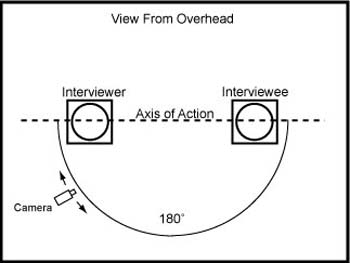
The 180 degree rule is used when two characters are in conversation in the same scene. The camera will go left to right and not exceed 180°. If the rule is not followed, the viewer could be confused on who is talking or who they are talking to. However, you some films have broken the 180° rule and it has worked such as The Shining.

Here is the example from The Shining. This clip shows the rule being broken creating a different view on the scene making it more interesting. 


Here is an image explaining the 180 degree rule, showing where the camera is places and the characters. 
parallel editing

Parallel editing is an effect used in film editing and shows two clips running side by side switching between each clip. It has lots of effects linked to it but the main point is to show that two things are happening at once, sometimes could be telling two stories at once or just showing things from a different point of view.

Here is an example of parallel editing. This clip is effective as it shows a view from both armies and shows that what they are both doing at the exact same time before they go into battle.

jump-cutting

Jump cuts are clips that jump from one shot to another and don't leave any form of transition between or anything to make the clips flow together. These types of shots can be used to show the passing of time or to draw attention to certain objects. Jump cuts are not used as much as they used to be because the can be misleading, but if used in the right clip they can work perfect. 

Here is an example showing how jump cuts are used.


montage

Montage is when you edit a group of small shots and put the clips together to make a large video sequence showing part over a long period of time. A montage includes all of the best parts or highlights of a video and saves the audience a lot of time by doing this. In films this is a really good way of showing the main parts in a short time and the speeding up of passing time. 

An example of this would be the Rocky training montage. This shows Rocky training over a long period of time but shortens the video to show the main parts. 

motivated edits

A motivated edit is when a scene cuts an changes to a different scene, or introduces another object or person that wasn't in the last scene. This technique is used in a very sly way so that the audience doesn't know that it has even happened. These edits are used mostly in horror films for example, when you hear a random sound when there is no other sound in the scene, the camera and character will look towards the sound but there will be nothing to be seen. The tension it built up as the camera is moving in this scene. 
 an edit from the camera turning towards that direction.

An example is shown below from 1:40 to 2:10.


seamless and continuity editing

Seamless and continuity editing can also be called 'invisible editing'. Although it is called invisible editing it doesn't mean that there is no editing, its just that editing and cuts between shots is so precise that it is like the scene was never even edited. The first person to master this technique was DW Griffiths.

Continuity editing is what makes a video flow from start to finish, it smooths the flow between each clip. This is to show the story as the director is trying to show, in the way that they view it. This technique helps the viewer to follow the story rather than seeing the techniques used to put the scene together

creating pace

Creating pace is used in films to speed up or slow down a film. A good example of this would be in action films in car chases or in fights. For the action films the scene will have a fast pace which will change the angle of the shot every 2 or 3 seconds. In other genres of films such as drama they use slower paced shots which have a long time on one subject whilst in a single angle. This could be used to show emotion on a persons face. 

Here is an example of a fast paced scene. 

Here is another example of a slow paced scene.